
I include here few reading material, papers, blogs, articles, software resources for Gleason grading system and Gleason grade prediction from Prostate Cancer biopsy images.
\n\nGleason Score, Prostate Cancer Grading & Prognostic Scoring, https://www.prostateconditions.org/about-prostate-conditions/prostate-cancer/newly-diagnosed/gleason-score
Gleason Grading system, Wikipedia page, https://en.wikipedia.org/wiki/Gleason_grading_system
Gleason grading system, MedlinePlus, https://medlineplus.gov/ency/patientinstructions/000920.htm
Ni Chen and Qiao Zhou, The evolving Gleason grading system, Chinese Journal of Cancer Research, https://www.ncbi.nlm.nih.gov/pmc/articles/PMC4779758/
Gleason Score, Science Direct, https://www.sciencedirect.com/topics/medicine-and-dentistry/gleason-score
Understanding Your Pathology Report: Prostate Cancer, https://www.cancer.org/treatment/understanding-your-diagnosis/tests/understanding-your-pathology-report/prostate-pathology/prostate-cancer-pathology.html
Pathology Grading of Renal Cell Carcinoma, https://emedicine.medscape.com/article/1612022-overview#a1
Hubutui, My code using PSPNet for MICCAI Gleason Challenge 2019,
\nhttps://github.com/hubutui/Gleason
Hwang Lab, TCGA prostate cancer Gleason score prediction using completed and statistical local binary patterns (Matlab/Python programs), https://github.com/hwanglab/tcga-prad-cslbp
Andreas Karagounis, Gleason, Training ResNet models for grading image patches of prostate cancer, https://github.com/akaragou/gleason
Essential Updates in Grading, Morphotyping, Reporting, and Staging of Prostate Carcinoma for General Surgical Pathologists, https://www.archivesofpathology.org/doi/pdf/10.5858/arpa.2018-0334-RA
I include here few reading material, papers, blogs, articles, software resources for Gleason grading system and Gleason grade prediction from Prostate Cancer biopsy images.
\n\nGleason Score, Prostate Cancer Grading & Prognostic Scoring, https://www.prostateconditions.org/about-prostate-conditions/prostate-cancer/newly-diagnosed/gleason-score
Gleason Grading system, Wikipedia page, https://en.wikipedia.org/wiki/Gleason_grading_system
Gleason grading system, MedlinePlus, https://medlineplus.gov/ency/patientinstructions/000920.htm
Ni Chen and Qiao Zhou, The evolving Gleason grading system, Chinese Journal of Cancer Research, https://www.ncbi.nlm.nih.gov/pmc/articles/PMC4779758/
Gleason Score, Science Direct, https://www.sciencedirect.com/topics/medicine-and-dentistry/gleason-score
Understanding Your Pathology Report: Prostate Cancer, https://www.cancer.org/treatment/understanding-your-diagnosis/tests/understanding-your-pathology-report/prostate-pathology/prostate-cancer-pathology.html
Pathology Grading of Renal Cell Carcinoma, https://emedicine.medscape.com/article/1612022-overview#a1
Hubutui, My code using PSPNet for MICCAI Gleason Challenge 2019,
\nhttps://github.com/hubutui/Gleason
Hwang Lab, TCGA prostate cancer Gleason score prediction using completed and statistical local binary patterns (Matlab/Python programs), https://github.com/hwanglab/tcga-prad-cslbp
Andreas Karagounis, Gleason, Training ResNet models for grading image patches of prostate cancer, https://github.com/akaragou/gleason
Essential Updates in Grading, Morphotyping, Reporting, and Staging of Prostate Carcinoma for General Surgical Pathologists, https://www.archivesofpathology.org/doi/pdf/10.5858/arpa.2018-0334-RA
Thanks a lot @gpreda !
\n\nAny idea what a \"negative\" gleason score means in the data we are given ? Does it mean N/A, or something actually related to prostate cancer detection research ? If the latter, how does it differ from \"0+0\" ?
", "rawMarkdown": "Thanks a lot @gpreda !\n\nAny idea what a \"negative\" gleason score means in the data we are given ? Does it mean N/A, or something actually related to prostate cancer detection research ? If the latter, how does it differ from \"0+0\" ? ", "votes": 3, "replies": [ { "id": 817639, "postDate": "2020-04-23T09:33:50.503Z", "content": "If you refer to \"negative\" value in the dataset, I think that this means negative exam, i.e. not present pathology.
", "rawMarkdown": "If you refer to \"negative\" value in the dataset, I think that this means negative exam, i.e. not present pathology.", "votes": 2 }, { "id": 817651, "postDate": "2020-04-23T09:40:39.143Z", "content": "Thanks for your quick reply. If you are correct, I wonder how is this category different from \"0+0\" ? Maybe someone from the organizing team may answer that ?
", "rawMarkdown": "Thanks for your quick reply. If you are correct, I wonder how is this category different from \"0+0\" ? Maybe someone from the organizing team may answer that ? ", "votes": 1 }, { "id": 817662, "postDate": "2020-04-23T09:54:37.390Z", "content": "@bdubreu \"negative\" and \"0+0\" are equivalent. Karolinska always uses 0+0 and Radboud always uses negative.
", "rawMarkdown": "@bdubreu \"negative\" and \"0+0\" are equivalent. Karolinska always uses 0+0 and Radboud always uses negative.", "votes": 2 }, { "id": 817681, "postDate": "2020-04-23T10:14:38.577Z", "content": "Ohh good call ! I didn't think of different labeling per institution. Thanks a lot !
", "rawMarkdown": "Ohh good call ! I didn't think of different labeling per institution. Thanks a lot ! \n", "votes": 1 }, { "id": 817695, "postDate": "2020-04-23T10:35:20.163Z", "content": "Sorry for the late answer, here you can find a graph highlighting the observation by @matthewmasters : https://www.kaggle.com/gpreda/panda-challenge-starting-eda (look for: Number of examinations grouped on Data provider and Gleason score)
", "rawMarkdown": "Sorry for the late answer, here you can find a graph highlighting the observation by @matthewmasters : https://www.kaggle.com/gpreda/panda-challenge-starting-eda (look for: Number of examinations grouped on Data provider and Gleason score)", "votes": 1 }, { "id": 817714, "postDate": "2020-04-23T11:03:59.197Z", "content": "The answer by @matthewmasters is indeed correct. It's just a different way of labeling. Both negative and 0+0 refer to a benign biopsy (so without prostate cancer).
", "rawMarkdown": "The answer by @matthewmasters is indeed correct. It's just a different way of labeling. Both negative and 0+0 refer to a benign biopsy (so without prostate cancer).", "votes": 2 } ] }, { "id": 817630, "postDate": "2020-04-23T09:30:28.753Z", "content": "Dear @gpreda,
\n\nI have up-voted this post. Although I am not participating in this competition, in my humble opinion one of the most important first steps in \"Data Science\", as with any science, is background reading and understanding what the problem you are trying to solve is, and thus how to best approach it. \nIt is usually observed that \"...a morning in the library can save a week in the laboratory...\" (although it has also been pointed out that a week in the laboratory can save you having to spend a morning in the library...).
\n\nAll the best,\ncarl
", "rawMarkdown": "Dear @gpreda, \n\nI have up-voted this post. Although I am not participating in this competition, in my humble opinion one of the most important first steps in \"Data Science\", as with any science, is background reading and understanding what the problem you are trying to solve is, and thus how to best approach it. \nIt is usually observed that \"*...a morning in the library can save a week in the laboratory...*\" (although it has also been pointed out that a week in the laboratory can save you having to spend a morning in the library...).\n\nAll the best,\ncarl", "votes": 3, "replies": [ { "id": 817696, "postDate": "2020-04-23T10:37:01.933Z", "content": "I absolutely agree with you - and I really enjoy spending time in the library 😄 .
", "rawMarkdown": "I absolutely agree with you - and I really enjoy spending time in the library 😄 .", "votes": 2 } ] } ], "comments": [ { "id": 817634, "author_name": "Benjamin Dubreu", "author_url": "", "post_date": "2020-04-23T09:31:21.790000", "content": "Thanks a lot @gpreda !
\n\nAny idea what a \"negative\" gleason score means in the data we are given ? Does it mean N/A, or something actually related to prostate cancer detection research ? If the latter, how does it differ from \"0+0\" ?
", "votes": 3, "replies": [ { "id": 817639, "author_name": "Gabriel Preda", "author_url": "", "post_date": "2020-04-23T09:33:50.503000", "content": "If you refer to \"negative\" value in the dataset, I think that this means negative exam, i.e. not present pathology.
", "votes": 2, "replies": [] }, { "id": 817651, "author_name": "Benjamin Dubreu", "author_url": "", "post_date": "2020-04-23T09:40:39.143000", "content": "Thanks for your quick reply. If you are correct, I wonder how is this category different from \"0+0\" ? Maybe someone from the organizing team may answer that ?
", "votes": 1, "replies": [] }, { "id": 817662, "author_name": "Matt", "author_url": "", "post_date": "2020-04-23T09:54:37.390000", "content": "@bdubreu \"negative\" and \"0+0\" are equivalent. Karolinska always uses 0+0 and Radboud always uses negative.
", "votes": 2, "replies": [] }, { "id": 817681, "author_name": "Benjamin Dubreu", "author_url": "", "post_date": "2020-04-23T10:14:38.577000", "content": "Ohh good call ! I didn't think of different labeling per institution. Thanks a lot !
", "votes": 1, "replies": [] }, { "id": 817695, "author_name": "Gabriel Preda", "author_url": "", "post_date": "2020-04-23T10:35:20.163000", "content": "Sorry for the late answer, here you can find a graph highlighting the observation by @matthewmasters : https://www.kaggle.com/gpreda/panda-challenge-starting-eda (look for: Number of examinations grouped on Data provider and Gleason score)
", "votes": 1, "replies": [] }, { "id": 817714, "author_name": "Wouter Bulten", "author_url": "", "post_date": "2020-04-23T11:03:59.197000", "content": "The answer by @matthewmasters is indeed correct. It's just a different way of labeling. Both negative and 0+0 refer to a benign biopsy (so without prostate cancer).
", "votes": 2, "replies": [] } ] }, { "id": 817630, "author_name": "Carl McBride Ellis", "author_url": "", "post_date": "2020-04-23T09:30:28.753000", "content": "Dear @gpreda,
\n\nI have up-voted this post. Although I am not participating in this competition, in my humble opinion one of the most important first steps in \"Data Science\", as with any science, is background reading and understanding what the problem you are trying to solve is, and thus how to best approach it. \nIt is usually observed that \"...a morning in the library can save a week in the laboratory...\" (although it has also been pointed out that a week in the laboratory can save you having to spend a morning in the library...).
\n\nAll the best,\ncarl
", "votes": 3, "replies": [ { "id": 817696, "author_name": "Gabriel Preda", "author_url": "", "post_date": "2020-04-23T10:37:01.933000", "content": "I absolutely agree with you - and I really enjoy spending time in the library 😄 .
", "votes": 2, "replies": [] } ] } ], "raw_markdown_by_id": { "817618": "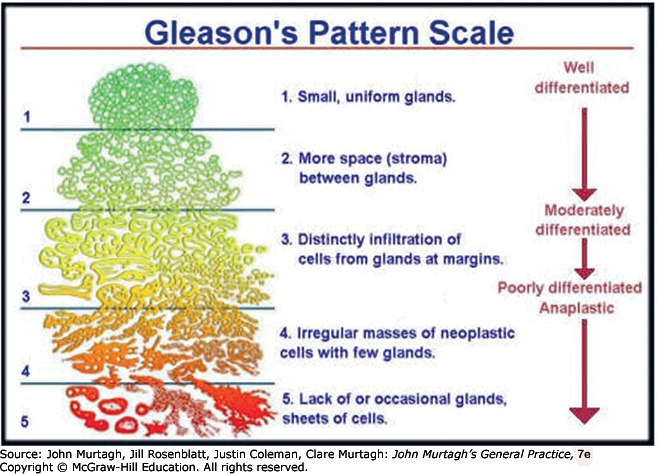\n\nI include here few reading material, papers, blogs, articles, software resources for Gleason grading system and Gleason grade prediction from Prostate Cancer biopsy images.\n\n1. Gleason Score, Prostate Cancer Grading & Prognostic Scoring, https://www.prostateconditions.org/about-prostate-conditions/prostate-cancer/newly-diagnosed/gleason-score \n\n2. Gleason Grading system, Wikipedia page, https://en.wikipedia.org/wiki/Gleason_grading_system \n\n3. Gleason grading system, MedlinePlus, https://medlineplus.gov/ency/patientinstructions/000920.htm \n\n4. Ni Chen and Qiao Zhou, The evolving Gleason grading system, Chinese Journal of Cancer Research, https://www.ncbi.nlm.nih.gov/pmc/articles/PMC4779758/ \n\n5. Gleason Score, Science Direct, https://www.sciencedirect.com/topics/medicine-and-dentistry/gleason-score \n\n6. Understanding Your Pathology Report: Prostate Cancer, https://www.cancer.org/treatment/understanding-your-diagnosis/tests/understanding-your-pathology-report/prostate-pathology/prostate-cancer-pathology.html \n\n7. Pathology Grading of Renal Cell Carcinoma, https://emedicine.medscape.com/article/1612022-overview#a1\n\n8. Hubutui, My code using PSPNet for MICCAI Gleason Challenge 2019, \n https://github.com/hubutui/Gleason \n\n9. Hwang Lab, TCGA prostate cancer Gleason score prediction using completed and statistical local binary patterns (Matlab/Python programs), https://github.com/hwanglab/tcga-prad-cslbp \n\n10. Andreas Karagounis, Gleason, Training ResNet models for grading image patches of prostate cancer, https://github.com/akaragou/gleason \n\n11. Essential Updates in Grading, Morphotyping, Reporting, and Staging of Prostate Carcinoma for General Surgical Pathologists, https://www.archivesofpathology.org/doi/pdf/10.5858/arpa.2018-0334-RA \n\n\n\n\n", "817634": "Thanks a lot @gpreda !\n\nAny idea what a \"negative\" gleason score means in the data we are given ? Does it mean N/A, or something actually related to prostate cancer detection research ? If the latter, how does it differ from \"0+0\" ? ", "817630": "Dear @gpreda, \n\nI have up-voted this post. Although I am not participating in this competition, in my humble opinion one of the most important first steps in \"Data Science\", as with any science, is background reading and understanding what the problem you are trying to solve is, and thus how to best approach it. \nIt is usually observed that \"*...a morning in the library can save a week in the laboratory...*\" (although it has also been pointed out that a week in the laboratory can save you having to spend a morning in the library...).\n\nAll the best,\ncarl" } }